Close


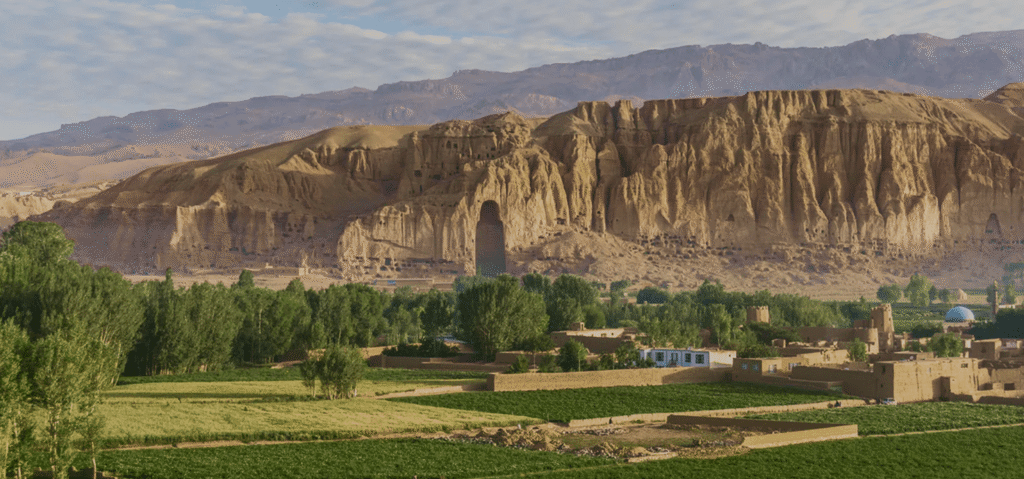
Afghanistan. Officially, the Islamic Emirate of Afghanistan is a landlocked country located at the crossroads of Central Asia and South Asia. Referred to as the Heart of Asia. It is bordered by Pakistan to the east and south, Iran to the west, Turkmenistan to the northwest, Uzbekistan to the north, Tajikistan to the northeast, and China to the northeast and east. Occupying 652,864 square kilometers (252,072 sq mi) of land, the country is predominantly mountainous with plains in the north and the southwest, which are separated by the Hindu Kush mountain range. Kabul is the country’s largest city and serves as its capital. According to the World Population Review, as of 2021, Afghanistan’s population is 40.2 million. The National Statistics Information Authority of Afghanistan estimated the population to be 32.9 million as of 2020.
Human habitation in Afghanistan dates to the Middle Paleolithic era. Popularly referred to as the graveyard of empires. The land has historically been home to various peoples and has witnessed numerous military campaigns, including those by the Persians, Alexander the Great, the Maurya Empire, Arab Muslims, the Mongols, the British, the Soviet Union, and a US-led coalition. Afghanistan also served as the source from which the Greco-Bactrians and the Mughals, amongst others, rose to form major empires.[30] The various conquests and periods in both the Iranian and Indian cultural spheres made the area a center for Zoroastrianism, Buddhism, Hinduism, and later Islam. The modern state of Afghanistan began with the Durrani Afghan Empire in the 18th century,[34] although Dost Mohammad Khan is sometimes considered to be the founder of the first modern Afghan state. Dost Mohammad died in 1863, days after his last campaign to unite Afghanistan, and Afghanistan was consequently thrown back into civil war. During this time, Afghanistan became a buffer state in the Great Game between the British Empire and the Russian Empire. From India, the British attempted to subjugate Afghanistan but were repelled in the First Anglo-Afghan War. However, the Second Anglo-Afghan War saw a British victory and the successful establishment of British political influence. Following the Third Anglo-Afghan War in 1919, Afghanistan became free of foreign political hegemony and emerged as the independent Kingdom of Afghanistan in June 1926 under Amanullah Khan. This monarchy lasted almost half a century until Zahir Shah was overthrown in 1973, following which the Republic of Afghanistan was established.
Since the late 1970s, Afghanistan’s history has been dominated by extensive warfare, including coups, invasions, insurgencies, and civil wars. The conflict began in 1978 when a communist revolution established a socialist state, and subsequent infighting prompted the Soviet Union to invade Afghanistan in 1979. Mujahideen fought against the Soviets in the Soviet–Afghan War and continued fighting amongst themselves following the Soviets’ withdrawal in 1989. The Islamic fundamentalist Taliban controlled most of the country by 1996, but their Islamic Emirate of Afghanistan received little international recognition before its overthrow in the 2001 US invasion of Afghanistan. The Taliban returned to power in 2021 after capturing Kabul and overthrowing the government of the Islamic Republic of Afghanistan, ending the 2001–2021 war. In September 2021 the Taliban re-established the Islamic Emirate of Afghanistan. The Taliban government remains internationally unrecognized.
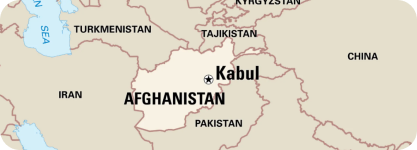
The capital city of Afghanistan is Kabul.
Afghanistan has a diverse population with various
ethnic groups, including Pashtuns, Tajiks, Hazaras,
Uzbeks, and others.
Pashto and Dari are the official languages.
Islam is the predominant religion, with the majority of Afghans being Sunni Muslims.
Afghanistan is rich in natural resources, including lithium, iron, zinc, and copper. It is the second largest producer of cannabis resin, and third largest of both saffron and cashmere the country is a member of the South Asian Association for Regional Cooperation and a founding member of the Organization of Islamic Cooperation. Due to the effects of war in recent decades, the country has dealt with high levels of terrorism, poverty, and child malnutrition. Afghanistan remains among the world’s least developed countries, ranking 180th in the Human Development Index. Afghanistan’s gross domestic product (GDP) is $81 billion by purchasing power parity and $20.1 billion by nominal values. Per capita, its GDP is amongst the lowest of any country as of 2020.
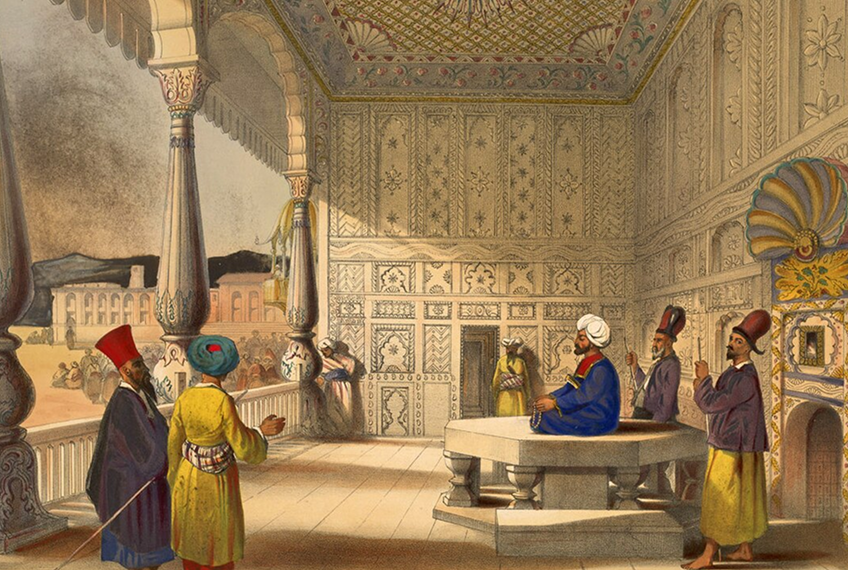
Afghanistan’s history spans five thousand years and the Afghan people have contributed to the emergence of many Central Asian empires. The ancient centers of culture and civilization were influenced by diverse outsiders such as Greece, Arabia, Iran, Central Asia, India, and China. The borders of Afghanistan were established in 1893 through negotiations with the British, and provincial governments emerged, taking the place of clan rule.
In 1919, Afghanistan gained independence from British occupying forces. From 1919-1973 Afghanistan modernized and built extensive infrastructure with the assistance of the international community. This period of relative stability ended in 1973.
In 1978 and 1979, a number of coups brought to power a communist government that drifted increasingly toward the USSR, ending with a Soviet puppet government in Kabul and an invasion of Soviet forces. Throughout the 80s, an indigenous Afghan resistance movement fought against the invading
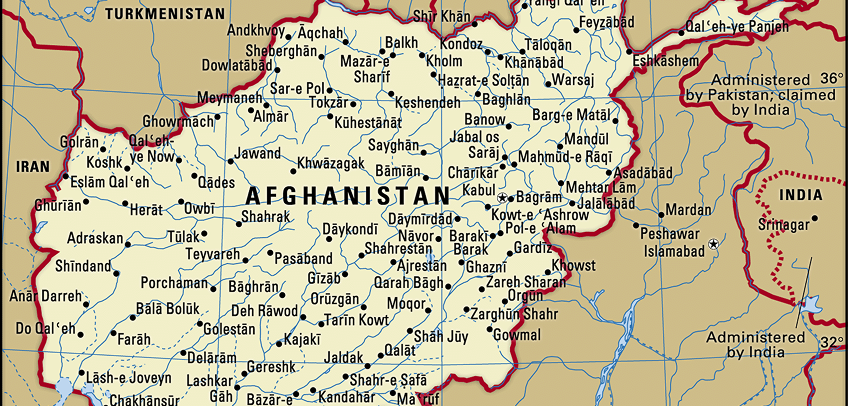
Afghanistan is located in the Heart of Asia, Roundabouts for Asia and Europe. It is a landlocked mountainous country located within South Asia and Central Asia. The country is the 40th largest in the world in size. Kabul is the capital and largest city of Afghanistan, located in the Kabul Province.
The other biggest cities in the country are Herat, Mazar-e-Sharif, Nangarhar, Kandahar and Kunduz. Afghanistan is completely landlocked, bordered by Iran to the west (925 kilometers), by the Central Asian States of Turkmenistan, Uzbekistan, and Tajikistan to the north and northeast (2,380 kilometers), by China at the easternmost top of the Wakhan Corridor (96 kilometers), and by Pakistan to the east and south (2,432 kilometers).
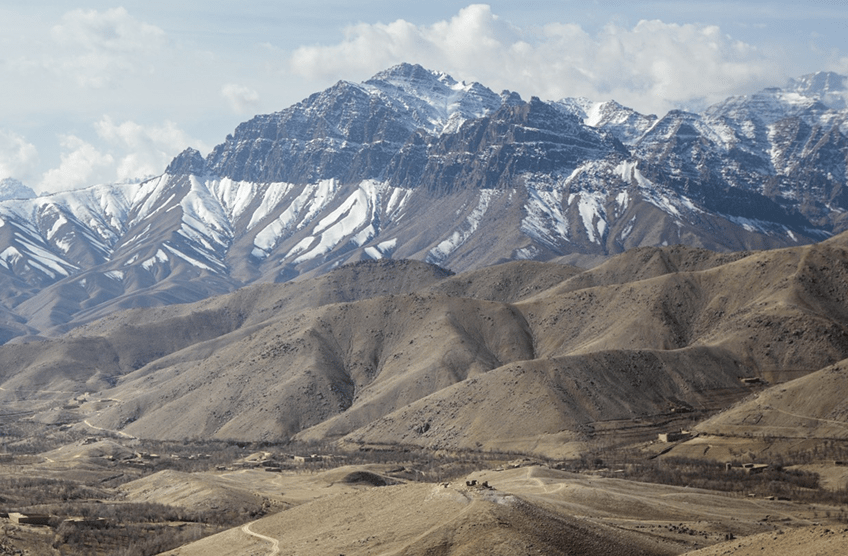
Afghanistan may be described as semi-arid for the most part but regional variations and climate contrasts according to levels of elevation. Annual rainfall is low, but the high mountains contain sources for many streams and rivers which supply water for cultivation.
Afghanistan is cold in winter. Snow falls in the center northern and northern east provinces. Eastern provinces are very warm in the summer but pleasant in winter. In general, Afghanistan has a pleasant weather in summer and specifically its spring has been celebrated warmly throughout the nation. It rains a lot in the spring where the rain level in the summer is
According to the survey made by Central statistics office (CSO), Islamic Republic of Afghanistan, the total population of the country is 29.2 Million. 14.9 Million Population is consisted on Male and 14.2 Million is consisted of Female. 20.7 Million Population is living in the suburbs and 6.9 Million are living in the cities.
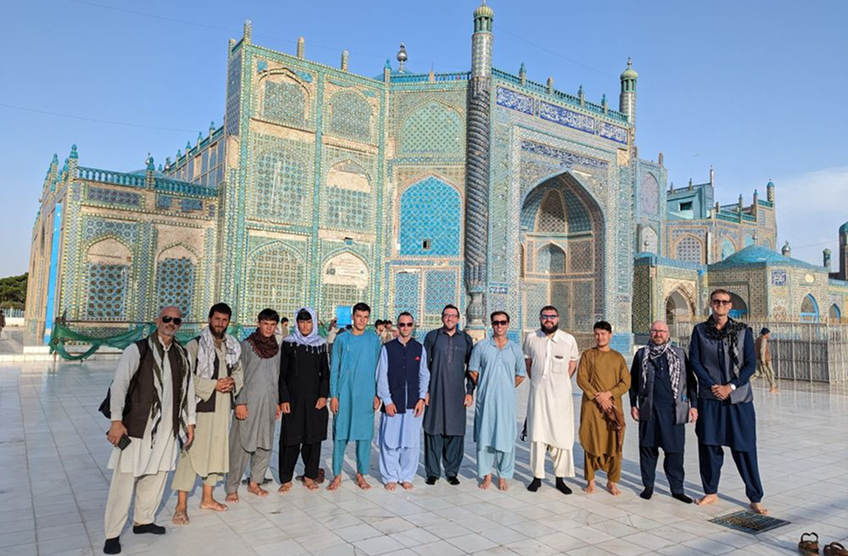
For centuries, Afghanistan has been a mosaic of people with diverse cultures, religions and languages. Afghanistan’s ethnically and linguistically rich and mixed population reflects its location at the crossroads of Central, South and Southwest Asia. Communities with separate religions, languages, and ethnic backgrounds have lived side by side for generations. Afghanistan still remains a country of dynamic diversity. The main ethnic groups are Pashtun, Tajik, Hazara, Uzbek, Turkmen, Aimaq, Baluch, Nuristani, Pahashaye, Barhawe, Arab, Gujar, Pamiriyan, and Kizilbash.
Pashto and Dari are Afghanistan’s official languages. Afghanistan’s Constitution stipulates that all other languages are “official” in the areas in which they are spoken by a majority of the population. Afghanistan is an Islamic country. An estimated 80% of the population is Sunni, following the Hanafi School of jurisprudence. The remainder of the population is predominantly Shi’a. Religious minorities of the country include Hindus, Sikhs, and a small community of Jews who have left the country during the decades of war
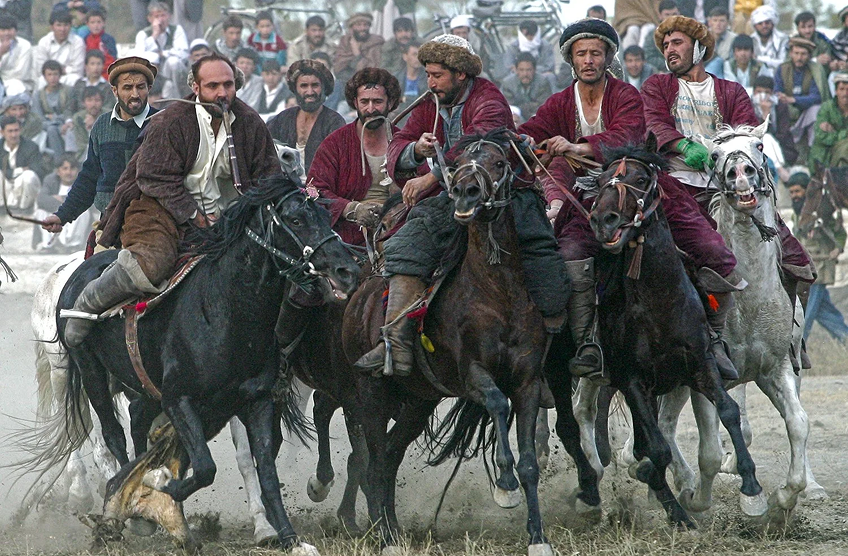
Artistic activity in Afghanistan can be traced back as early as 18,000 BC. For centuries Afghanistan linked the civilizations of Iran, India, and China. In the Islamic Era, the Ghaznavid rulers of the 10th to 12th centuries and the Ghorids fostered artistic development. Continuing through the Timurid dynasty, Afghanistan’s cultural life prospered and flourished through the rulers’ high regard for men of learning and artists. The descendants of Timur turned the city of Herat into a center of cultural activity enticing artists such as Abdul Rahman Jami, Abdulhay, and Kamal al-Din Bihzad to create finely illustrated books and exquisite buildings.
Folk lore and legends told through song and storytelling are a centuries-old tradition in Afghanistan and continue to thrive today. Afghanistan has a rich literary tradition as well. During the medieval period literature was written in Dari, Pashto, Turkic and Arabic. The royal courts of regional empires such as the Samanids, the Ghaznavids, the Timurids, and the Mughals, were great patrons of Persian literature supporting literary geniuses like Rumi, Rudaki, Abdullah Ansari, Ferdowsi and Jami.
 +93 (0) 210 0381
 info@mfa.gov.af
 Get Directions

© All rights reserved. Ministry of Foreign Affairs of Islamic Emirate of Afghanistan.


